
How To Read A Certificate of Analysis.
A COA is the only thing standing between a label and a guess. Every batch we sell has one, produced by an independent lab — and none of it is worth much if you do not know which lines to check. Here is what each part of the report means.
Where to find them
One report per batch, on the product page
Every product page in the catalog carries the Certificate of Analysis for the batch in stock. One report per batch, not one certificate reused across a year of production, and you do not have to email anyone to see it.
The QR code on the vial
Every vial ships with a QR code. Scanning it opens the testing lab’s own verification page rather than a document hosted by us, so you are checking the report against the lab that produced it. That is the only version of verification that means anything.
What to look for
Seven lines worth checking
Labs lay their reports out differently, but the same information is on all of them.
- 01IdentityThe compound the lab actually found, not the one the label claims. It shows up as an identity confirmation or a determined identification. If a report never names the compound, it is not identifying anything.
- 02PurityA percentage measured by HPLC, shown against a specification such as “not less than 95%”. The chromatogram below it is the raw evidence: one tall, clean peak is what you want. Our batches average 99.8%.
- 03Net contentHow much compound is in the vial, against the amount on the label. A 1000mg vial reporting 1011.25mg is honest. One quietly reporting 800mg is underfilled, however pure it is.
- 04SterilityWhether the vial came back free of microbial growth. Purity tells you the molecule is the right one; sterility tells you what else made it into the vial alongside it.
- 05EndotoxinsBacterial fragments, measured in EU/mL against a stated threshold and reported as a pass or a fail. A very pure compound can still fail this, which is exactly why it is tested on its own.
- 06Heavy metalsAn ICP-MS panel with a limit for each element — arsenic, cadmium, chromium, mercury, lead. Look for a specification on every row, not a single “passed” stamp covering the lot.
- 07Batch number and verification keyThe batch or lot number on the report has to match the one printed on your vial, and the key on the report is what you enter with the lab to confirm it is genuine. A COA for a different batch is a marketing document.
Real reports
Three of ours, side by side
Three labs, three products, three different panels. Between them they cover every line above.
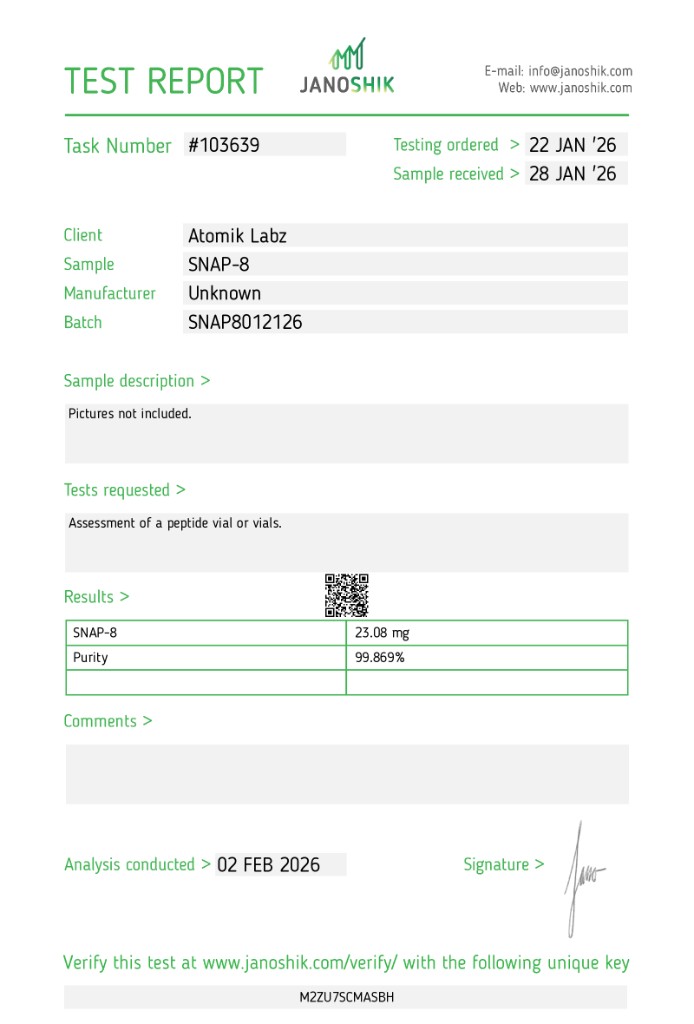
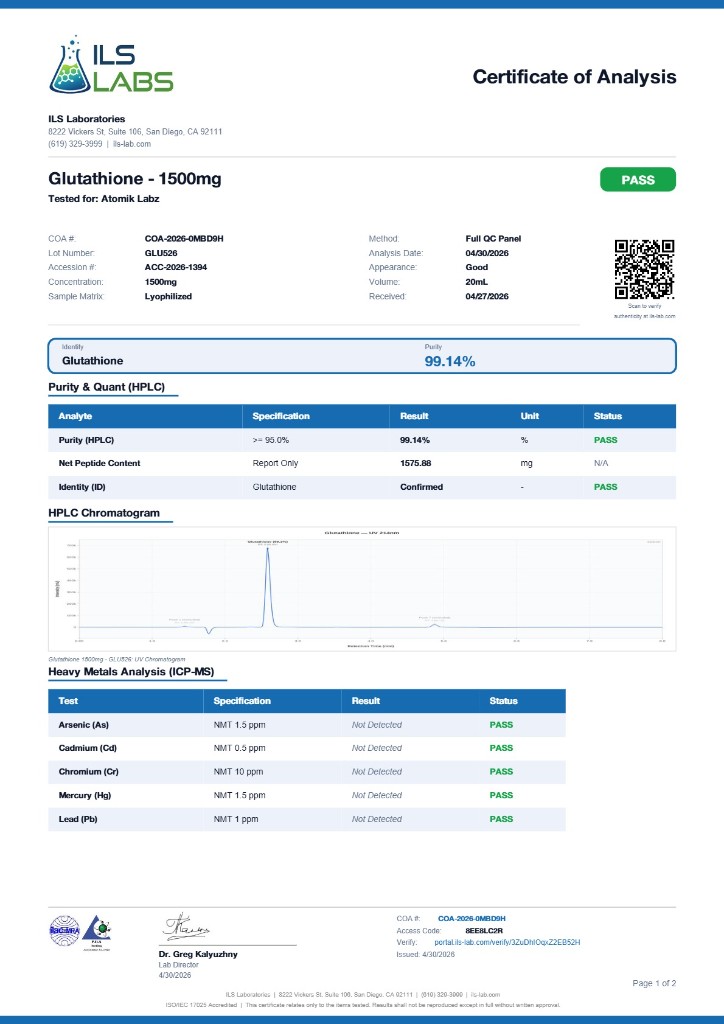
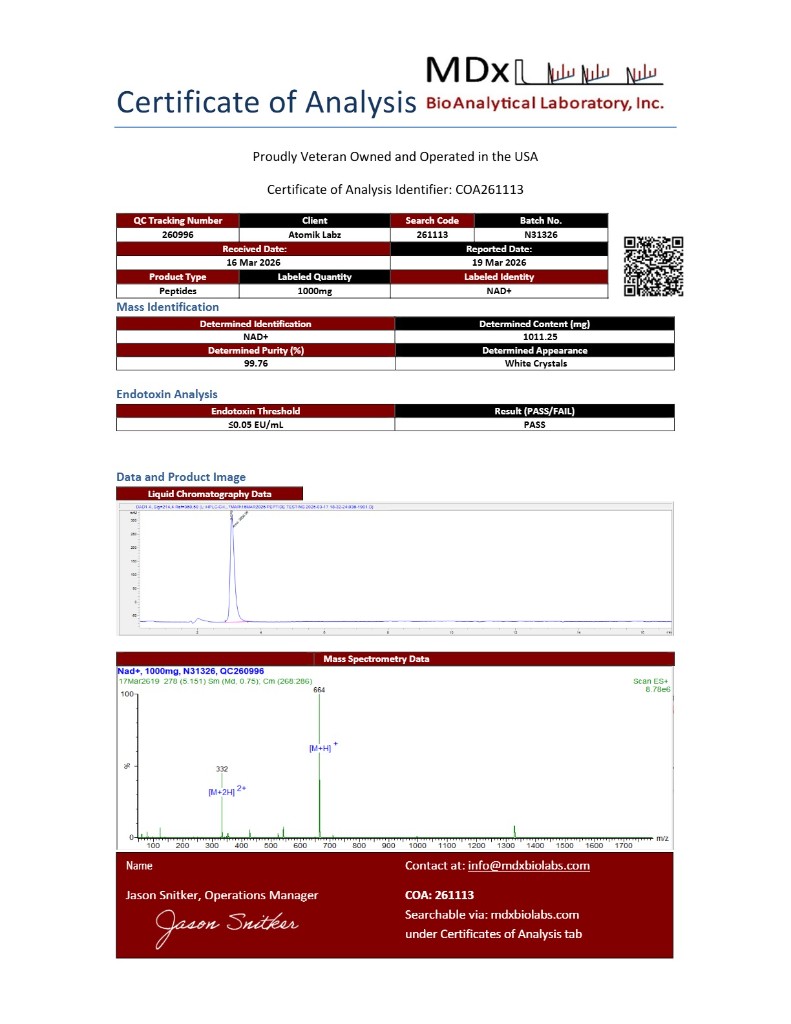
Batch numbers on these reports are real, and each one is verifiable with the lab that issued it.
Every batch, documented.
Registration takes about thirty seconds. It is what opens live stock and the batch COA on every product page.
Shop NowThese products are intended for laboratory research use only.